One of the few
things that I knew about fungi before coming into this class was that,
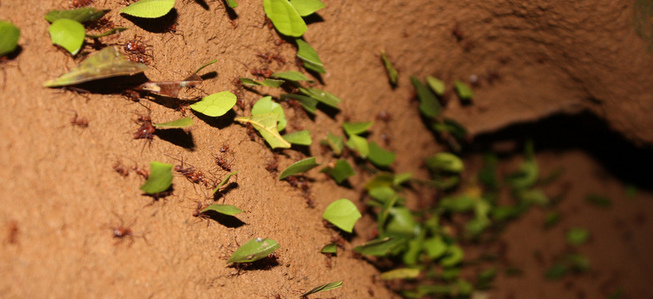
leaf-cutting ants and fungus had a symbiotic relationship. In this mutually
beneficial symbiosis the ants cultivate fungus gardens, which provides a safe
home for the fungi and also a food source for the ants. But this symbiotic
relationship also includes microbes. And new research has discovered that it
can help speed the development of better antibiotics and biofuels.
 |
| https://microbewiki.kenyon.edu/images/6/65/Leafcolony.jpg |
Ten years ago
Cameron Currie a microbial ecologist at the University of Toronto in Ontario,
Canada, was studying the symbiosis relationship between the leaf-cutting ants
and the fungus. He discovered that ants carried colonies of actinomycete
bacteria on their bodies. These bacteria in turn make an antibiotic that
protects the ants’ fungal crop from parasitic fungi such as Escovopsis, which threatens the ants’
food source and is a constant danger for the ants.
Currie and Jon Clardy at the Harvard
Medical School and their colleagues also reported that they had isolated one of
the antifungals produced by the bacteria. The antifungal slowed the growth of a
drug-resistant strain of the fungus Candida
albicans, which causes yeast infections in people. With these discoveries
the researchers hope that they will learn how to make better antibiotics by
studying the bacteria and how they have adapted to fight off the parasites.
Although these discoveries seemed to
have much potential it didn’t get much attention or support after that. These studies
were from 1999, but no further updates were added, which left me wondering why
they didn’t continue.
http://www.nature.com/news/2009/090329/full/458561a.html

No comments:
Post a Comment